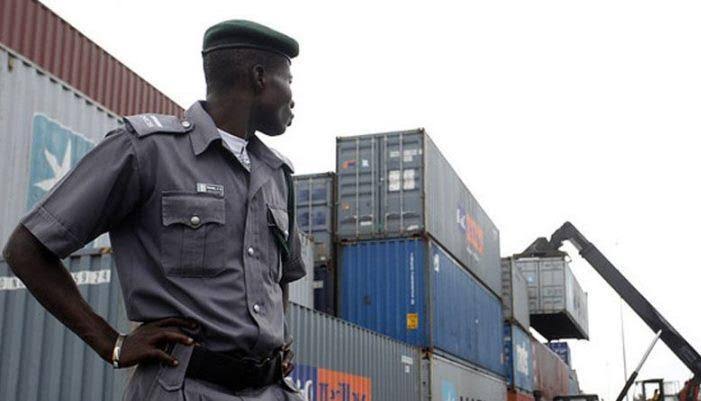


Understanding Customs Duties and Import Taxes When Shopping from China to Nigeria
Navigating customs duties and import taxes is often the most stressful part of running an international sourcing or e-commerce business in Nigeria. Unanticipated fees at the port can instantly turn a highly profitable product into a financial loss.
Understanding how the Nigerian Customs Service (NCS) calculates duties, which taxes apply to your cargo, and how to legally structure your imports will help you protect your profit margins when sourcing from China.
How Official Customs Duties are Calculated in Nigeria
If you are importing via the traditional formal route (using an official corporate setup and clearing your own containers), the Nigerian Customs Service determines your financial obligations based on the CIF value of your goods.
All duties and taxes are calculated as percentages of this total CIF value, converted to Nigerian Naira (NGN) using the official Central Bank of Nigeria (CBN) Customs Exchange Rate at the time of clearing. Because this rate fluctuates based on macroeconomic policy, the cost of clearing the exact same item can change from one week to the next.
The Standard Tax Breakdown:
Surface Duty (ID): This is the base tariff on your specific product category, ranging anywhere from 5% to 35% based on the global Harmonized System (HS) Code. Electronics and essential raw materials usually enjoy lower duty rates, while luxury items or goods that compete with local Nigerian manufacturing carry much higher tariffs.
Value Added Tax (VAT): A standard 7.5% charge applied to the sum of the CIF value, the Surface Duty, and any other applicable port fees.
Ecowas Trade Liberalization Scheme (ETLS): A 0.5% levy applied to all imports from non-ECOWAS countries (including China) to fund regional integration.
Comprehensive Import Supervision Scheme (CISS): A 1% administrative fee charged on the Free On Board (FOB) value of the goods for cargo inspection services.
Port Development Levy: A 7% surcharge calculated specifically on top of your base Surface Duty amount, used to maintain port infrastructure.
Navigating Formal Clearing Requirements
To import goods formally through major Nigerian entry points like Apapa Port, Tin Can Island Port, or Murtala Muhammed International Airport, your shipments must be accompanied by specific regulatory documentation:
Form M: The mandatory electronic document required by the CBN and NCS for all visible imports into Nigeria.
Pre-Arrival Assessment Report (PAAR): Issued by Nigeria Customs, this document formally determines the value and duty rate of your incoming cargo.
SONCAP Certification: Administered by the Standards Organisation of Nigeria (SON), this compliance certificate ensures that regulated items—especially consumer electronics, household appliances, and electrical hardware—meet strict safety and quality benchmarks before they can clear customs.
The Cost-Effective Alternative: The DDP Shipping Hack
For small-to-medium business owners, independent developers, or digital platform creators sourcing tech inventory from platforms like #1688, managing the formal clearing process independently can be incredibly expensive and time-consuming.
To bypass this complexity and keep costs highly predictable, the most practical solution is utilizing DDP (Delivered Duty Paid) shipping lines, also popularly known as "Customs Inclusive" Air and Sea Freight.
How DDP Protects Your Budget:
When you use a specialized Nigeria-focused freight forwarder with a warehouse in Guangzhou or Yiwu, they absorb the entire customs clearance process on your behalf.
Instead of dealing with Form M, PAAR, fluctuating CBN exchange rates, and unexpected port storage fees (demurrage), you pay your shipping agent a flat, transparent rate.
For Air Freight, this is a fixed price per Kilogram (KG).
For Sea Freight, it is a fixed price per Cubic Meter (CBM).
This single flat fee completely covers the cost of movement from China, the ocean or air freight, the local customs clearing duties at Lagos ports, and terminal handling fees.
By shifting to a DDP logistics model, you eliminate the risk of sudden customs reassessments, allowing you to compute your exact landing cost per unit the moment your goods leave the factory floor in China.
#customs #importduty #nigeriancustoms #taxes #shipping #logistics #crossbordertrade #ecommerce #chinaafricatrade #supplychain #businessgrowth #azatell #azatellmarket #azatellsocial #azatellresearch
Read more
Understanding how the Nigerian Customs Service (NCS) calculates duties, which taxes apply to your cargo, and how to legally structure your imports will help you protect your profit margins when sourcing from China.
If you are importing via the traditional formal route (using an official corporate setup and clearing your own containers), the Nigerian Customs Service determines your financial obligations based on the CIF value of your goods.
All duties and taxes are calculated as percentages of this total CIF value, converted to Nigerian Naira (NGN) using the official Central Bank of Nigeria (CBN) Customs Exchange Rate at the time of clearing. Because this rate fluctuates based on macroeconomic policy, the cost of clearing the exact same item can change from one week to the next.
The Standard Tax Breakdown:
Surface Duty (ID): This is the base tariff on your specific product category, ranging anywhere from 5% to 35% based on the global Harmonized System (HS) Code. Electronics and essential raw materials usually enjoy lower duty rates, while luxury items or goods that compete with local Nigerian manufacturing carry much higher tariffs.
Value Added Tax (VAT): A standard 7.5% charge applied to the sum of the CIF value, the Surface Duty, and any other applicable port fees.
Ecowas Trade Liberalization Scheme (ETLS): A 0.5% levy applied to all imports from non-ECOWAS countries (including China) to fund regional integration.
Comprehensive Import Supervision Scheme (CISS): A 1% administrative fee charged on the Free On Board (FOB) value of the goods for cargo inspection services.
Port Development Levy: A 7% surcharge calculated specifically on top of your base Surface Duty amount, used to maintain port infrastructure.
To import goods formally through major Nigerian entry points like Apapa Port, Tin Can Island Port, or Murtala Muhammed International Airport, your shipments must be accompanied by specific regulatory documentation:
Form M: The mandatory electronic document required by the CBN and NCS for all visible imports into Nigeria.
Pre-Arrival Assessment Report (PAAR): Issued by Nigeria Customs, this document formally determines the value and duty rate of your incoming cargo.
SONCAP Certification: Administered by the Standards Organisation of Nigeria (SON), this compliance certificate ensures that regulated items—especially consumer electronics, household appliances, and electrical hardware—meet strict safety and quality benchmarks before they can clear customs.
For small-to-medium business owners, independent developers, or digital platform creators sourcing tech inventory from platforms like #1688, managing the formal clearing process independently can be incredibly expensive and time-consuming.
To bypass this complexity and keep costs highly predictable, the most practical solution is utilizing DDP (Delivered Duty Paid) shipping lines, also popularly known as "Customs Inclusive" Air and Sea Freight.
How DDP Protects Your Budget:
When you use a specialized Nigeria-focused freight forwarder with a warehouse in Guangzhou or Yiwu, they absorb the entire customs clearance process on your behalf.
Instead of dealing with Form M, PAAR, fluctuating CBN exchange rates, and unexpected port storage fees (demurrage), you pay your shipping agent a flat, transparent rate.
For Air Freight, this is a fixed price per Kilogram (KG).
For Sea Freight, it is a fixed price per Cubic Meter (CBM).
This single flat fee completely covers the cost of movement from China, the ocean or air freight, the local customs clearing duties at Lagos ports, and terminal handling fees.
By shifting to a DDP logistics model, you eliminate the risk of sudden customs reassessments, allowing you to compute your exact landing cost per unit the moment your goods leave the factory floor in China.
#customs #importduty #nigeriancustoms #taxes #shipping #logistics #crossbordertrade #ecommerce #chinaafricatrade #supplychain #businessgrowth #azatell #azatellmarket #azatellsocial #azatellresearch